
Measuring What Matters 2024 | Program Archive

Symposium Theme
Measuring what Matters in Social Determinants of Health for Chronic Illness
There is a known association between social determinants of health (SDoH) and chronic disease disparities, and between chronic disease and health related quality of life (HRQL). Far less is known about associations among SDoH, chronic disease and health outcomes, including HRQL. This symposium proposes to highlight conceptual relationships among these concepts and stimulate research ideas, including novel methodologies to analyze relationships between SDoH and HRQL for people with chronic illness.
Level: Intermediate
Some prior training or work experience relevant to the topic is recommended to aid in understanding of symposium content.
Symposium Committee Co-Chairs
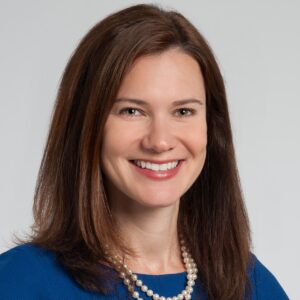
Brittany Lapin, PhD
Lerner Research Institute,
Cleveland Clinic
Ohio, United States

Deborah M. Miller, PhD LISW-S
Mellen Center,
Cleveland Clinic
Ohio, United States
Sessions
Session 1: An Overview of SDoH for Health Outcomes
Description:
This session will provide an introduction to the symposium. ISOQOL Past President, Joanne Greenhalgh, will discuss the relevance of this topic to our organization. The primary presenters at this first plenary will provide an introduction to SDoH, including conceptualizations and perspectives of SDoH. The relevance of SDoH to HRQL and its application in addressing outcomes for persons with chronic disease will be discussed.
Objectives:
- Learn how the topic is relevant to HRQL and ISOQOL
- Provide an introduction to and perspectives of SDoH
- Understand how SDoH play a role in chronic disease and health outcomes
Speakers:
 Joanne Greenhalgh, PhD, University of Leeds, United Kingdom
Joanne Greenhalgh is a Professor of Applied Social Research Methodology at the School of Sociology and Social Policy and Past President of the International Society for Quality of Life Research. Her research has focused on exploring how clinicians use PROMs and other outcome measures in clinical practice. She has conducted a number of systematic reviews of literature in this field. Joanne also has expertise in realist methods and was part of the RAMESES team that developed quality and reporting standards and resources and training materials for realist evaluation.
 Ghazala Mir, PhD, University of Leeds, United Kingdom
Ghazala Mir is Professor of Health Equity and Inclusion at the University of Leeds with research interests in health and social inequalities, including religious and ethnic minorities. Her research focuses on the experience of people underserved by health and other public services and she has led work to highlight key research priorities in this field. She leads the multidisciplinary Inequalities Research Network and the international Partnerships for Equity and Inclusion, which bring together academics, advocacy organisations, public services practitioners and policymakers to help reduce the inequalities that affect disadvantaged groups. Her research has been published by the UN Research Institute for Social Development and as case studies of good practice by the Chief Medical Officer and the Economic and Social Research Council.
 Ifeolorunbode (Bode) Adebambo, MD, Case Western Reserve University, Ohio, United States
Ifeolorunbode (Bode) Adebambo, MD is Associate Professor of Family Medicine at Case Western Reserve University (CWRU). She is an educator and clinician serving the disproportionately impacted populations of Cleveland, Ohio. Clinically, she directs inpatient care for the Department of Family Medicine and previously served as Medical Director for a non-profit organization serving immigrant and refugee populations in Northeast Ohio. She has trained diverse learners as health professionals and taught health disparities locally and nationally. Her prior teaching led to development of a previous book: Health Disparities: Weaving a New Understanding with Case Narratives (2019) and another in press: Racism, Microaggressions and Allyship in Health Care: A Narrative Approach to Learning. She is passionate about ending inequities in health care.
Contributor:
- Alyson Mahar, PhD, Health Quality Program, Queen’s University, Ontario, Canada
Session 2: Addressing SDoH to Improve Health and Well-Being
Description:
Representatives from the CDC and NIMHD will discuss conceptualizations of SDoH and strategies for addressing SDoH from research and programmatic perspectives. A community-level intervention to address blood pressure will be used as an example to highlight how clinic and community linked interventions can address SDoH and improve outcomes.
Objectives:
- Discuss strategies, challenges and opportunities for addressing SDoH
- Describe examples of federal approaches to addressing SDoH from program and research perspectives
- Understand challenges and opportunities for clinic and community linked interventions
Speakers:
 Karen Hacker, MD MPH, National Center for Chronic Disease Prevention and Health Promotion, CDC, Georgia, United States
Karen Hacker is the Director of CDC’s National Center for Chronic Disease Prevention and Health Promotion, where she oversees a portfolio that includes Maternal Mortality, School health, obesity prevention, smoking policies and the leading chronic diseases. Dr. Hacker has a long history of public health practice and has held a variety of leadership roles in public health, hospital administration, and academics. Dr. Hacker received her MD from Northwestern University School of Medicine and her MPH from Boston University School of Public Health and continues to see patients as a primary care physician in adolescent medicine.
 Deborah Duran, PhD, National Institute on Minority Health and Health Disparities (NIMHD) at the National Institutes of Health, Maryland, United States
Dr. Duran is the Senior Advisor on Data Science, Analytics and Systems to the Director of the National Institutes of Minority and Health Disparities at the National Institutes of Health. She focuses on implicit and explicit biases in data curation, AI and ethics, machine learning algorithms, predictive analytics, risk stratification, unjust implementations, and inclusive natural language processing. She advocates for the inclusion of social determinant of health (SDOH) in big data systems to enable comprehensive diagnostics, treatments, and interventions to reduce health disparities. Prior to this role, she has been the director of science policy, scientific planning, and data analytics for over 20 years, including Performance Director for NIH. She is an author and received two HHS secretarial awards and numerous NIH awards exemplifying her leadership skills and ability to advance science. She strives to ensure health disparity topics benefit from emerging data science innovations, and that researcher adopt the advantages of large data sets and technologies to reduce health disparities. To achieve this end, she is the co-founder of the ScHARe platform designed for population science, including social determinants of health, behavioral and environmental data sets, to provide the advantages of big data for health disparity research. The target audience are women and populations underrepresented in data science, as well as low resource minority serving institutions, community colleges, and those isolated who want to do cloud computing health disparity and health delivery research.
 Shari Bolen, MD MPH, The MetroHealth System and Case Western Reserve University, Ohio, United States
Dr. Bolen is the Alfred F. Connor Sr. Health Services and Population Health Research Professor, Professor of Medicine and Population and Quantitative Health Sciences at Case Western Reserve University (CWRU), Founding Director of the Population Health and Equity Research Institute at The MetroHealth System, and a general internal medicine physician. Dr. Bolen serves as the Director of Cardiovascular Disease Programs for Better Health Partnership – a regional health improvement collaborative and co-leads the Ohio Cardiovascular and Diabetes Health Collaborative (Cardi-OH) funded by the Ohio Department of Medicaid and Heart Healthy Ohio Initiative funded by the Agency for Health Care Research and Quality. Nationally, she recently served on the Department of Health and Human Services National Clinical Care Commission charged with developing recommendations to congress on addressing gaps in federal programs and policies for persons living with diabetes and serves on the Centers of Disease Control and Prevention National Hypertension Control Roundtable. Her career has focused on implementation of evidence-based strategies and innovative programs within primary care clinics to improve cardiovascular health outcomes and advance health equity in these outcomes with a specific interest in diabetes, obesity, and hypertension. Her primary goal is to improve the care of the patients and communities she serves.
Session 3: Methodological Approaches to Quantify SDoH
Description:
This session will address methodological approaches to measuring SDoH. Methodology topics include composite summary indexes, geocoding, and complex systems modeling of causal effects.
Objectives:
- Learn how to define SDoH for inclusion in research studies
- Introduction to novel methodologies such as geocoding and complex systems modeling
- Understand the social predictors of several HRQL outcomes according to machine-learning and other advanced models
Speakers:
 David Cella, PhD, Department of Medical Social Sciences, Feinberg School of Medicine, Northwestern University, Illinois, United States
David Cella, PhD is Professor and the Ralph Seal Paffenbarger Chair Emeritus in the Department of Medical Social Sciences at the Northwestern University Feinberg School of Medicine. He is an elected member of the National Academy of Medicine and the Academy of Behavioral Medicine Research, and a fellow of the American Society of Clinical Oncology. Dr. Cella developed and is continually refining the Functional Assessment of Chronic Illness Therapy (FACIT) Measurement System for outcome evaluation in patients with chronic medical conditions. He also led the development of the NIH Roadmap Initiative to build a Patient Reported Outcome Measurement Information System (PROMIS), the Neurology Quality of Life (Neuro-QoL) Measurement System, and the Emotional Health domain of the NIH Toolbox. He studies questions regarding quality-of-life measurement in clinical trials, cross-cultural equivalence of quality of life measurement, efficacy of psychosocial interventions in chronic illness, and medical outcomes research. He has published more than 1,000 peer-reviewed articles, most of which focus on the unique contribution that the patient perspective has upon the evaluation of health and health care. Dr. Cella has studied quality of life as a scientific enterprise, bringing the voice of the patient into consideration of value and opportunities for improvement on the healthcare system. For this, he was awarded the NAM Gustav O. Lienhard Award for Advancement of Health Care in 2016.
 Jarrod E. Dalton, PhD, Center for Populations Health Research, Cleveland Clinic, Ohio, United States
Jarrod E. Dalton, PhD is Associate Staff in the Lerner Research Institute’s Department of Quantitative Health Sciences and Director of the Center for Populations Health Research at Cleveland Clinic. He is also Associate Professor of Medicine in the Cleveland Clinic Lerner College of Medicine at Case Western Reserve University. Dr. Dalton’s expertise is in applying statistical, mathematical and simulation modeling approaches to problems in population health.
 Lisa Lines, PhD MPH, RTI International, California, United States
Lisa M. Lines, PhD, MPH, has an extensive background in both managing and contributing to successful research projects for both public- and private-sector clients and has more than 20 years of experience in health care research and consulting. Since joining RTI in 2009, she has amassed experience with program evaluations, large-scale database analyses (including machine learning and other “big data” methods), and interactive decision-analytic models, as well as literature reviews and policy analyses. She has published in a wide variety of subject areas, including health policy and payment reform, health care quality and care experiences, risk adjustment, cost-effectiveness and affordability issues, illness burden, and disparities and inequities.
Session 4: Research in Chronic Conditions
Description:
This session will follow a series of clinical and public health research presentations documenting the relationship between SDoH and HRQL for individuals living with diverse chronic illnesses.
Objective:
- Based on research, learn how SDoH applies to HRQL and health outcomes in persons with cardiovascular disease, autoimmune inflammatory disorders, mental illness, and for transgender and gender-diverse individuals.
Speakers:
 Foster Osei Baah, MS-PhD RN, Emory University, Georgia, United States
Foster Osei Baah, PhD, RN is a cardiovascular nurse scientist with a program of research focused on the social determinants of cardiovascular health behavior, self-care, cardiometabolic disease and cardiovascular health disparities in marginalized groups. The fundamental goal of this research program is to inform, design, and test interventions that enhance health behavior, improve health outcomes, and promote equity across diverse population groups. Prior to joining the Nell Hodgson Woodruff School of Nursing as a Tenure Track Assistant Professor, he completed a PhD in Nursing Science at the University of Pennsylvania and postdoctoral fellowship at the Social Determinants of Obesity and Cardiovascular Risk Laboratory at the National Heart, Lung, and Blood Institute (NHLBI) with a focus on intervention design to address obesity and cardiovascular health disparities in resource limited neighborhoods.
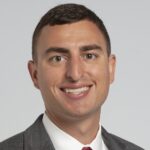 Justin Abbatemarco, MD, Cleveland Clinic Lerner College of Medicine & Mellen Center, Ohio, United States
Dr. Justin Abbatemarco, MD is an Assistant Professor at the Cleveland Clinic Lerner College of Medicine and a Staff Physician at the Mellen Center. He graduated from the Cleveland Clinic neurology residency where he served as Chief Resident and is dual fellowship trained in neuroimmunology from the Cleveland Clinic Mellen Center and autoimmune neurology from the University of Utah. He is board certified in Neurology from the American Board of Psychiatry and Neurology (ABPN).
As Director of Inpatient General Neurology at Cleveland Clinic, he enhances patient care and educates future medical professionals. In his outpatient clinic, he specializes in managing central nervous system inflammatory disorders. Dr. Abbatemarco also contributes to the field as a member of ABPN’s Behavioral Neurology, Cognition, and Psychiatry Test Writing Committee and the AAN Graduate Education Committee. His research focuses on neuroinflammatory disorders and health disparities.
 Manraj Kaur, PhD, Brigham and Women’s Hospital, Harvard Medical School, Massachusetts, United States
Dr. Manraj Kaur (She/Her) is an Investigator and Lead Faculty for Research and Innovation at the Patient-Reported Outcomes, Value, and Experience (PROVE) Center, situated in the Department of Surgery at Brigham and Women’s Hospital, Boston. Holding a cross-appointment at Harvard Medical School, Dr. Kaur is committed to integrating patient perspectives into clinical decision-making and quality improvement initiatives. Specializing in patient-reported outcome measurement, her research, especially within minority and underserved communities, aims to enhance person-centered clinical care. Dr. Kaur earned her doctoral and Master’s degrees in Rehabilitation Science with a health economics and outcomes research focus from McMaster University in Canada. Her research has been funded by the National Institutes of Health, Canadian Institutes for Health Research and the Canadian Cancer Society.
 Jan R. Boehnke, PhD, University of Dundee, United Kingdom
Jan R. Boehnke, PhD, is a Reader in the School of Health Sciences at the University of Dundee (UK). His research focuses on the connections between mental and physical health, especially for people living with severe mental illnesses. He uses patient-reported outcome data collected in a variety of settings to investigate the differential impacts of conditions as well as the cumulative burden associated with them. As a research methodologist, Dr. Boehnke is interested in modern psychometric and statistical techniques, and has in recent years worked on core outcome sets and their dissemination. He is Co-Editor in Chief of Quality of Life Research.
Session 5: Implementation Science: Application to Clinical Care and Policy
Description:
Short presentations will discuss the realities of addressing SDoH, controversies related to SDoH including who is responsible for delivering interventions (communities, health care providers, health organizations/systems, health insurers, government agencies) and how implementation science can guide the translation of SDoH into practice and policy. A moderated Q&A and audience Q&A will follow to close out the event.
Objectives:
- Discuss who is responsible for driving policy delivering interventions
- Understand how implementation science can guide translation of SDoH research into practice and policy
Speakers:
 David Chambers, D.Phil, National Cancer Institute, Maryland, United States
Dr. David Chambers is Deputy Director for Implementation Science in the Office of the Director in the Division of Cancer Control and Population Sciences (DCCPS) at the National Cancer Institute (NCI). Dr. Chambers manages a team focusing on efforts to build and advance the field of Implementation Science (IS) through funding opportunities, training programs, research activities, dissemination platforms, and enhancement of partnerships and networks to integrate research, practice and policy. Prior to his arrival at NIH, Dr. Chambers worked as a member of a research team at Oxford University, where he studied national efforts to implement evidence-based practice within healthcare systems. He publishes on strategic research directions in implementation science and serves as a plenary speaker at numerous scientific conferences. He received his A.B. degree (with Honors) in Economics from Brown University in 1997, and an M.Sc. and D.Phil degree in Management Studies (Organisational Behaviour) in 1998 and 2001, respectively, from Oxford University (UK).
 J. Gmerice Hammond, MD MPH, Washington University School of Medicine, Missouri, United States
Dr. Hammond is a cardiologist and health services and policy researcher at Washington University in St Louis. The goal of her research is to reduce inequities in cardiovascular disease. Specifically, her work examines the role that health policy implementation plays in race and socioeconomic-based inequities in cardiovascular disease outcomes. Her current work is focused on gaining a better understanding of how payment policies influence the implementation strategies used to manage high-risk, high-cost conditions for populations made socially vulnerable due to systemic and structural violence, specifically racism and chronic socioeconomic deprivation.
 Jeff Micklos, Health Care Transformation Task Force, D.C., United States
Jeff Micklos is the Executive Director of the Health Care Transformation Task Force. An attorney by training, Jeff is the former Executive Vice President, Management, Compliance, & General Counsel of the Federation of American Hospitals, a national trade association representing investor-owned hospitals, and a former Partner in the Health Law Department of the international law firm of Foley & Lardner LLP. Mr. Micklos began his career as a litigator and regulatory counsel for the Health Care Financing Administration, U.S. Department of Health and Human Services, and also served in the Office of General Counsel of the Social Security Administration.
Jeff is a graduate of the Columbus School of Law, The Catholic University of America, and received a Bachelor Arts Degree from Villanova University. He resides in Washington, DC with his wife, Monica, and their four children.
ISOQOL members receive complimentary access to past virtual symposia. Learn more about becoming a member.

The International Society for Quality of Life Research (ISOQOL) is a global community of researchers, clinicians, health care professionals, industry professionals, consultants, and patient research partners advancing health related quality of life research (HRQL).
Together, we are creating a future in which patient perspective is integral to health research, care and policy.